

An audience of about 500 people filled Cahn Auditorium on October 8 for CIERA’s Annual Public Lecture, held as Northwestern’s homecoming celebrations began in its 175th anniversary year. Prof. Sara Seager of the University of Toronto led the audience through “From Lab to Cosmos: Three Frontiers in the Search for Signs of Life Beyond Earth,” a talk that began with ancient bacteria and ended with a liquid that refuses to evaporate.
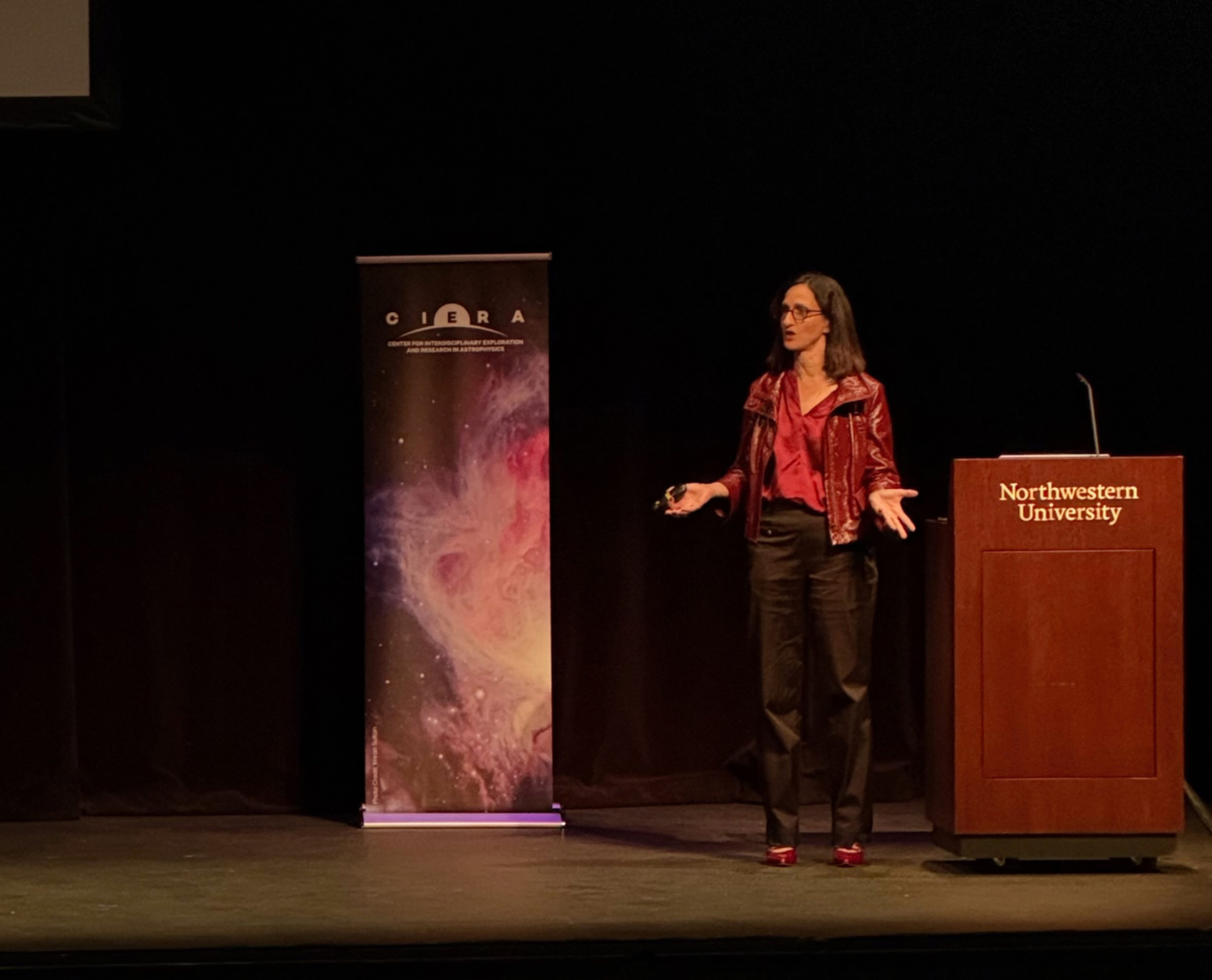
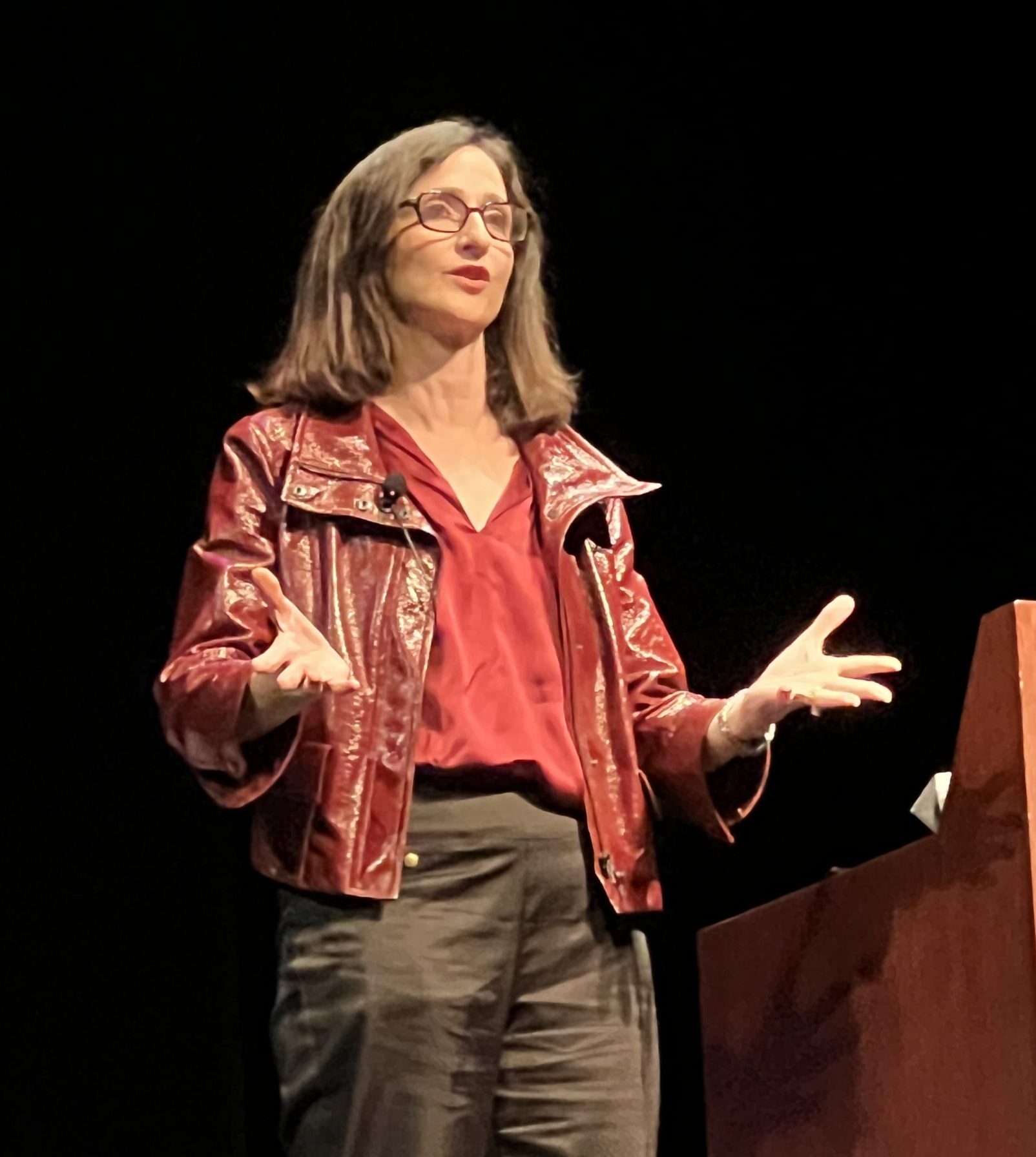
CIERA Director Vicky Kalogera welcomed guests, thanked The Alumnae of Northwestern University and CIERA’s Board of Visitors for their support, and introduced Seager, a MacArthur Fellow and member of the U.S. National Academy of Sciences, as someone who “has turned that ancient question into a science.” After about 20 years at MIT, Seager recently joined the University of Toronto as the North Star Distinguished Professor at the Canadian Institute for Theoretical Astrophysics. She is also the author of the memoir The Smallest Lights in the Universe.
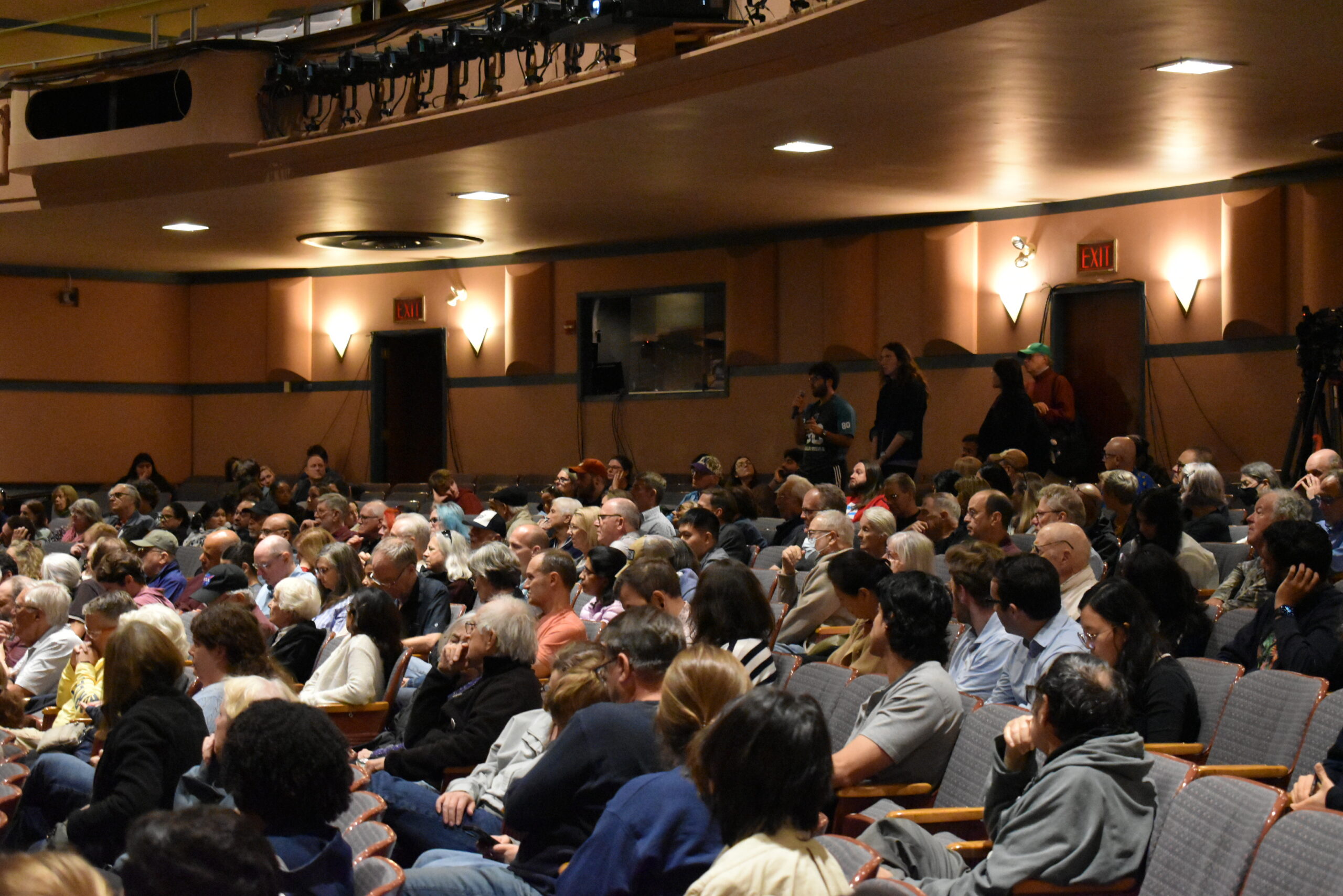
Seager began billions of years ago, with cyanobacteria that filled Earth’s atmosphere with oxygen. Oxygen is so reactive that it would disappear without life constantly replenishing it, which makes it one of astronomers’ favorite signs of life.
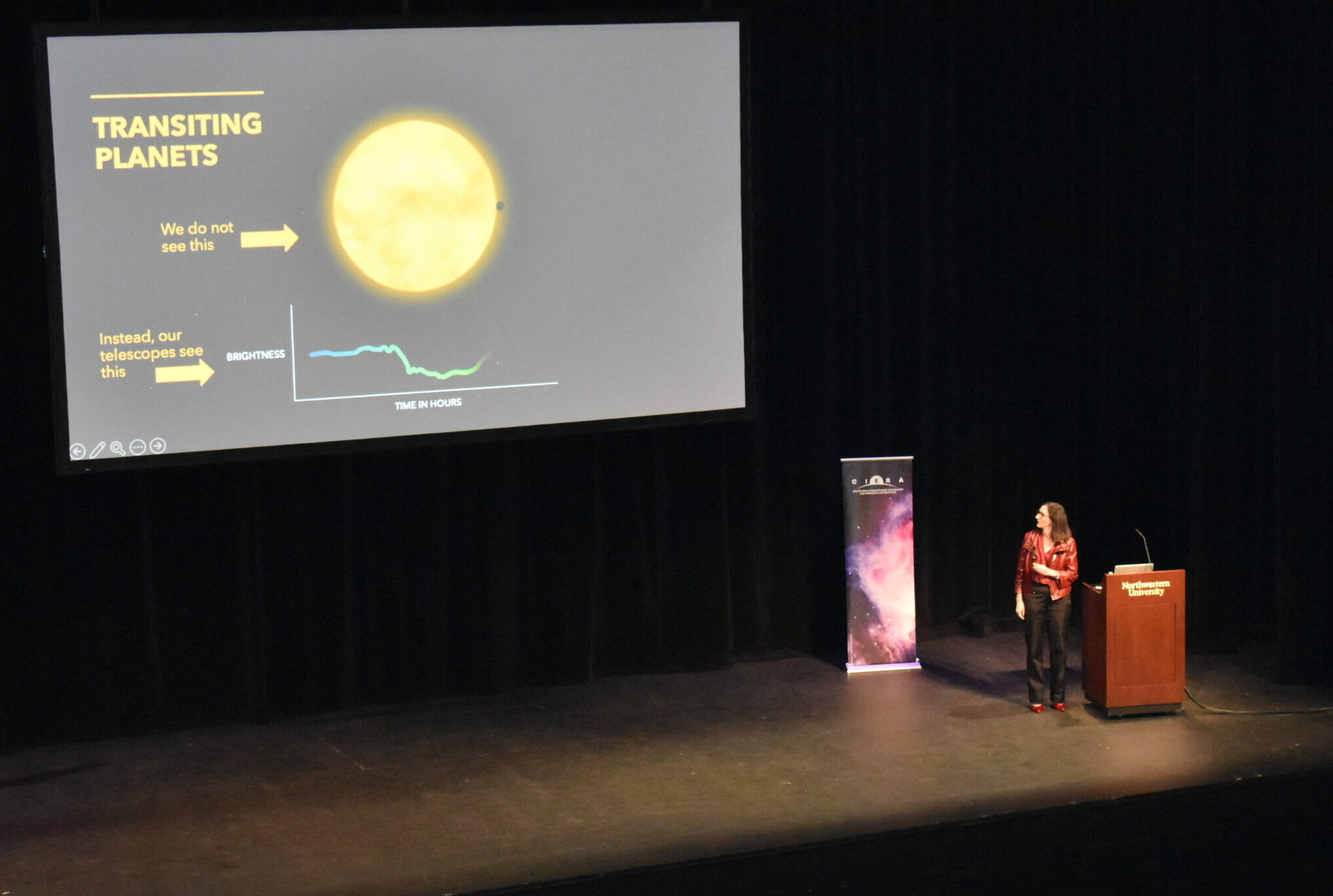
Her first frontier was the search for biosignature gases on planets beyond our solar system. Seager invited the audience to read real data from the James Webb Space Telescope: a star dims slightly when a planet crosses in front of it, and the dip is a little deeper at colors of light that the planet’s atmosphere absorbs. Asked where the planet looked bigger, audience members called out 4.5 microns, the wavelength where carbon dioxide absorbs. “By eye we can see evidence of an exoplanet atmosphere,” she said. The method works for large, hot planets, but astronomers cannot yet do the same for small rocky ones, and there are no biosignature gases to report yet.
That difficulty led her to Venus. In 2020, Seager and Prof. Jane Greaves announced the detection of phosphine gas in Venus’s atmosphere. After checking known chemistry, the team concluded that nothing they knew of could produce it in those amounts, which left room for the possibility of life. Seager was candid that the result is controversial and that many in the community do not accept it.
The idea has an obvious problem: about 50 kilometers up, Venus’s clouds have an Earth-like temperature and pressure but are made of concentrated sulfuric acid. Seager showed a sped-up video of table sugar, a stand-in for DNA, turning into dried carbon in the acid, then described what her team found next: nucleic acid bases that stayed unchanged for more than a year, and a DNA-like molecule her team reports is stable. Whether sulfuric acid could be a solvent for life is still, as she put it, a proposed hypothesis, one meant to motivate missions to Venus.
To get there, Seager is working on the Morningstar Missions to Venus. The first mission is planned with Rocket Lab, and a later probe could carry 10,000 miniature molecular sensors to look for complex organic molecules in the clouds. The audience watched a video of a weather-balloon test of the sensors that reached about 90,000 feet.
The final frontier was a surprise. While evaporating sulfuric acid from a sample of amino acids, an engineer on Seager’s team found a tiny amount of liquid that would not go away. It was an ionic liquid, a salt that stays liquid at room temperature and essentially does not evaporate. Seager said ionic liquids can form from planetary materials and are possible habitats for life on worlds too hot or too low in pressure for water, from exoplanets to Mars to beneath the clouds of Venus. She brought samples for the audience to see after the talk.
Throughout, Seager returned to a theme from her own career. When she started studying exoplanet atmospheres about 30 years ago, she said, almost no one believed the approach would work, and today it is the main way astronomers study them. “The line between mainstream and crazy is constantly shifting,” she said. She closed by wishing the audience “your own special journey.”
 The Q&A was wide-ranging, with questions from undergraduates, a Kellogg professor and a postdoc, among others, on everything from how biomolecules could survive in Venus’s clouds to the role of AI in chemistry experiments.
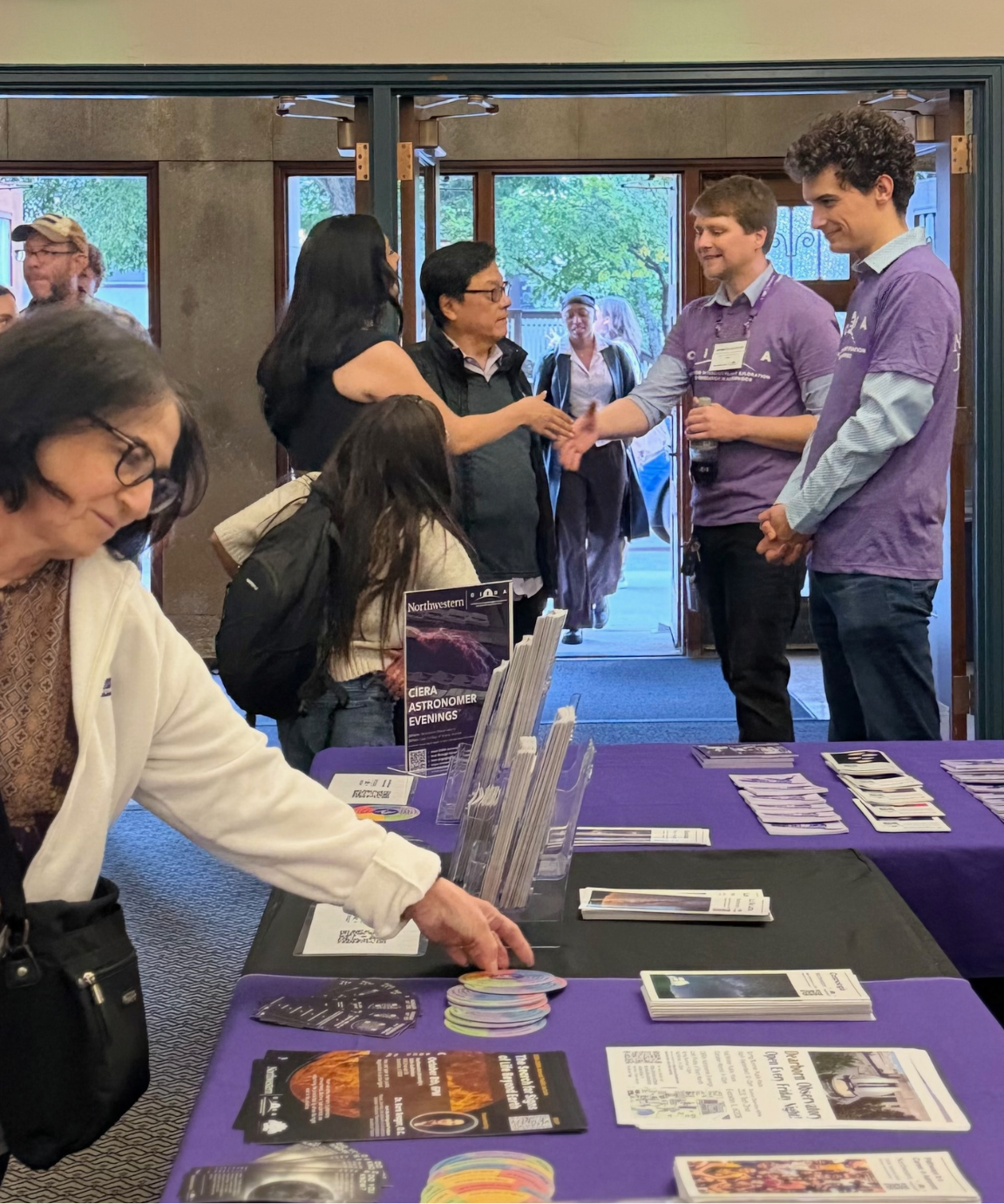
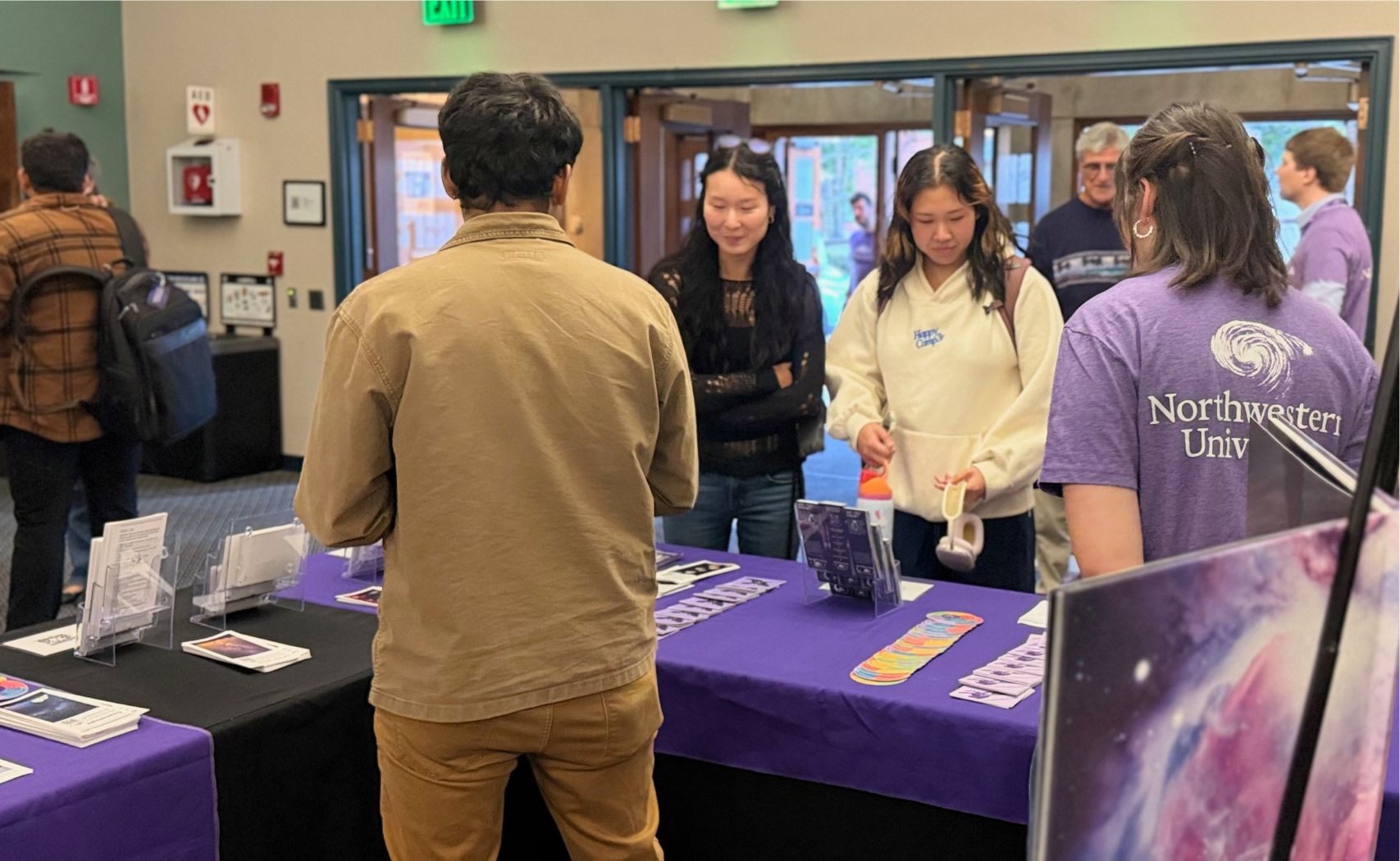
Before and after the lecture, visitors stopped by the Ask A Scientist tables in the lobby, staffed by CIERA students and postdocs. Earlier that day, Seager gave a colloquium for CIERA astronomers, “Venus as a Potentially Habitable Planet,” and met with postdocs and graduate students.
A recording of the lecture is available above or on CIERA’s YouTube channel. Thank you to everyone who joined us in person and online, and to the student and postdoc volunteers and the operations team who made the evening possible!
The CIERA Annual Public Lecture is supported by The Alumnae of Northwestern University.
Photo Credits: Heather Beattie, Anastasia Moriakova
