
We are delighted to announce that six CIERA Postdoctoral Fellows will be joining the CIERA community in Fall 2026. Please join us in extending a warm welcome to these outstanding researchers!
 William O. Balmer
William Balmer (Johns Hopkins University) captures images of exoplanets using powerful telescopes both on the ground and in space. They analyze these observations to better understand the orbits and atmospheres of exoplanets, offering insights into how planets form, what they are made of, and how they evolve over time.
 Maria Luisa Buzzo
Maria Luisa Buzzo (Yale University) studies the formation of ultra-diffuse and dwarf galaxies, with a focus on systems that appear deficient in dark matter and what they reveal about galaxy formation and dark matter physics. At CIERA, she plans to conduct a systematic search for these galaxies using wide-area surveys and deep learning, and follow them up with spectroscopy and ultra-deep imaging to constrain their formation pathways. This will provide a way to compare the observed properties of these systems with theoretical expectations for different dark matter models.
 Gokul Srinivasaragavan
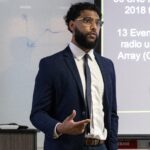
Gokul Srinivasaragavan (University of Maryland, College Park) studies the most energetic and luminous endpoints of massive stars, particularly those that launch relativistic jets powered by compact remnants formed after stellar explosions. He uses both space and ground-based telescopes across the electromagnetic spectrum to observe and characterize these dramatic events.
 Nicholas Rui
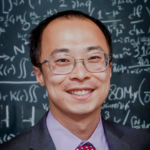
Nicholas, NHFP Hubble Fellow at Princeton, studies stellar physics, particularly at the intersection of seismology, binary interactions, and magnetic fields. He will collaborate with experts in stellar evolution at CIERA to investigate the role of stellar oscillations in identifying past interactions and measuring magnetic fields in stars and white dwarfs.
 Samantha Wu
Samantha Wu (Carnegie Observatories) studies stellar evolution and high energy astrophysics. She uses theoretical models to work towards understanding the physical processes underlying observations of transient events and stars.
 Zeyuan Xuan
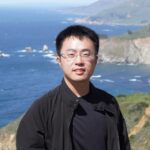
Zeyuan Xuan (University of California, Los Angeles) studies the dynamics and gravitational wave signatures of compact object binaries in various astrophysical environments, such as globular clusters and galactic nuclei. His work combines simulations with gravitational wave data analysis to understand the formation and detectability of eccentric binaries and other environmentally perturbed systems. At CIERA, he plans to connect these studies to multi-band and multi-messenger observations, particularly in preparation for future missions such as LISA, and explore their implications for astrophysics and cosmology.