
Center for Interdisciplinary Exploration and Research in Astrophysics (CIERA) graduate students Alice Cai, Charles Gibson, Josh Harry, and Andy Marszewski are four of 28 total recipients to earn a $10,000 fellowship award from the Illinois Space Grant Consortium (ISGC) to support their research in the 2026-2027 academic year.
Funded by NASA’s National Space Grant College and Fellowship Project, the ISGC award is granted to Illinois graduate students whose research aligns with NASA’s mission areas of aeronautics research, lunar exploration, science, spaceflight programs, and space technology.
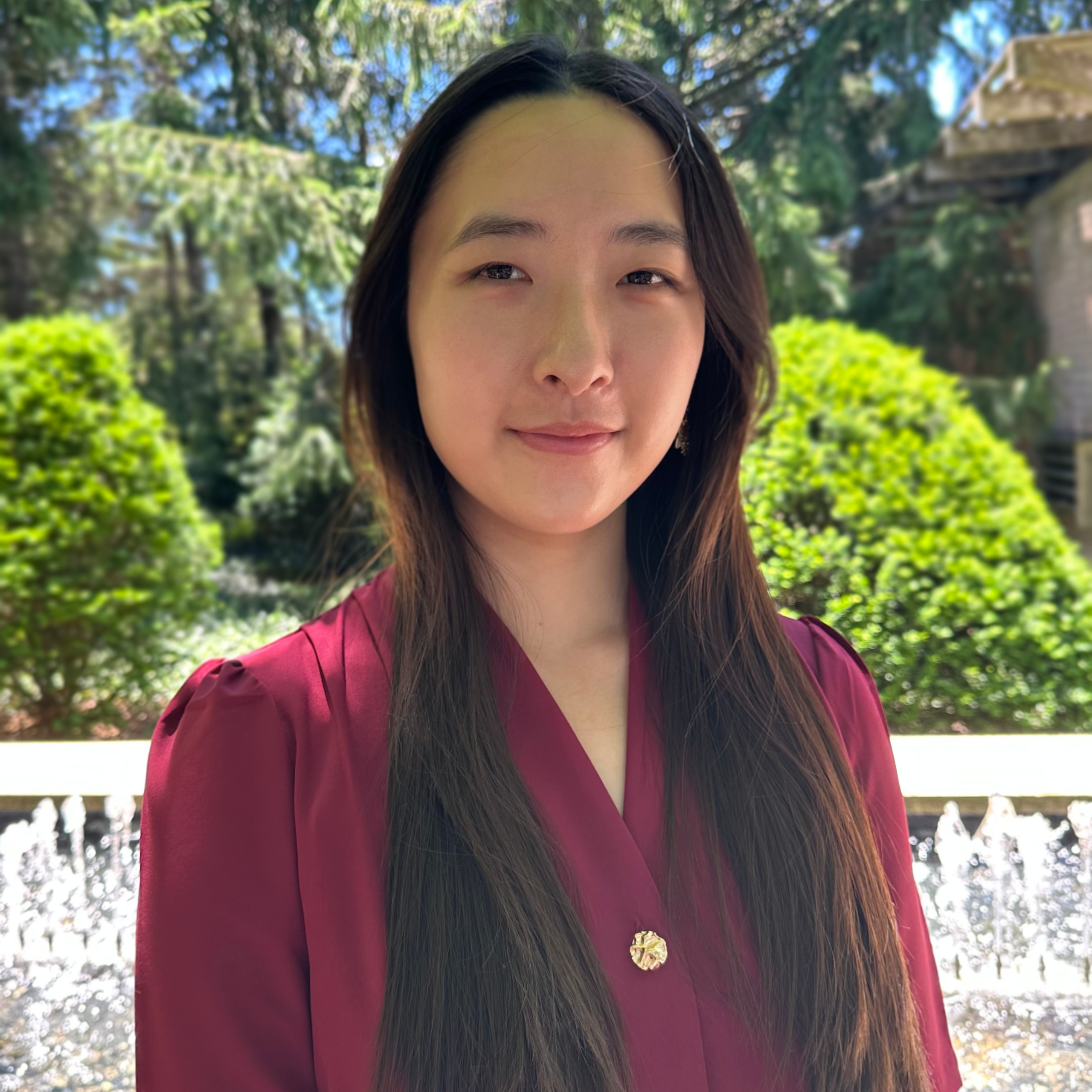 Third-year Ph.D. student in the Department of Physics and Astronomy, Alice Cai, said winning the grant is a way for her to “give back” to advisor Wen-fai Fong, whose year-round funding allows Cai to do full-time research on the cosmic mystery of transient, ultra-bright radio wave flashes known as fast radio bursts (FRBs), whose origins and properties are still not fully understood.
“I find FRBs so interesting because the answer is still to be found,” said Cai. “I know my research is cool, but to have other people agree and want to fund it is very validating.”
Cai is part of the Canadian Hydrogen Intensity Mapping Experiment (CHIME) FRB collaboration, which recently spotted one of the brightest FRBs on record with a network of land-based radio telescope outriggers. Looking ahead, Cai and the team plan to use space-based telescopes, which can capture incredibly high-resolution images, to pinpoint the exact locations of FRBs within their galaxies.
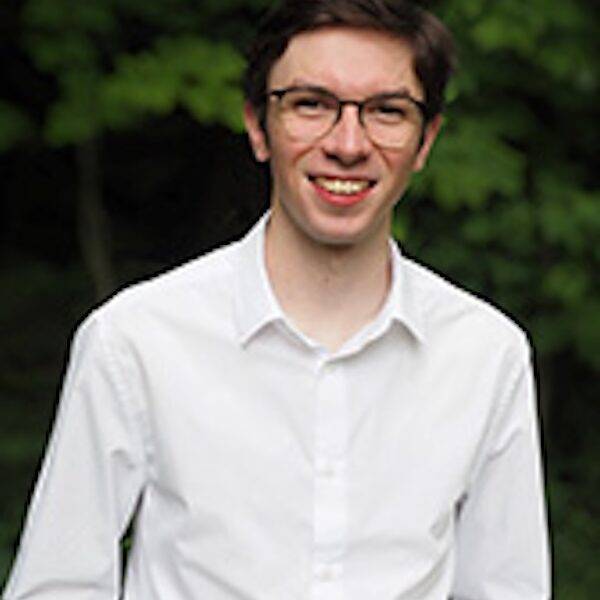 After previously receiving the ISGC undergraduate scholarship, second-year Ph.D. student in the Department of Physics and Astronomy, Charles Gibson, credits the consortium for supporting his research from the very beginning.
“Applying for the Illinois Space Grant Consortium fellowship was a natural step for me as a graduate student because the program was already such an influential part of my academic trajectory,” said Gibson. “I am so grateful for its influence on my development as a scientist and researcher.”
Under advisor Fred Raiso, Gibson studies what happens when stars from different clusters crash into each other, including how these collisions change the trajectory of the stars’ growth. He runs computer codes to simulate stellar collisions, then analyzes changes in star structure, composition, and mass, which can alter the evolution and structure of star clusters. In particular, Gibson is interested in how collisions involving giant stars can result in the formation of black holes, which especially dominate cluster dynamics.
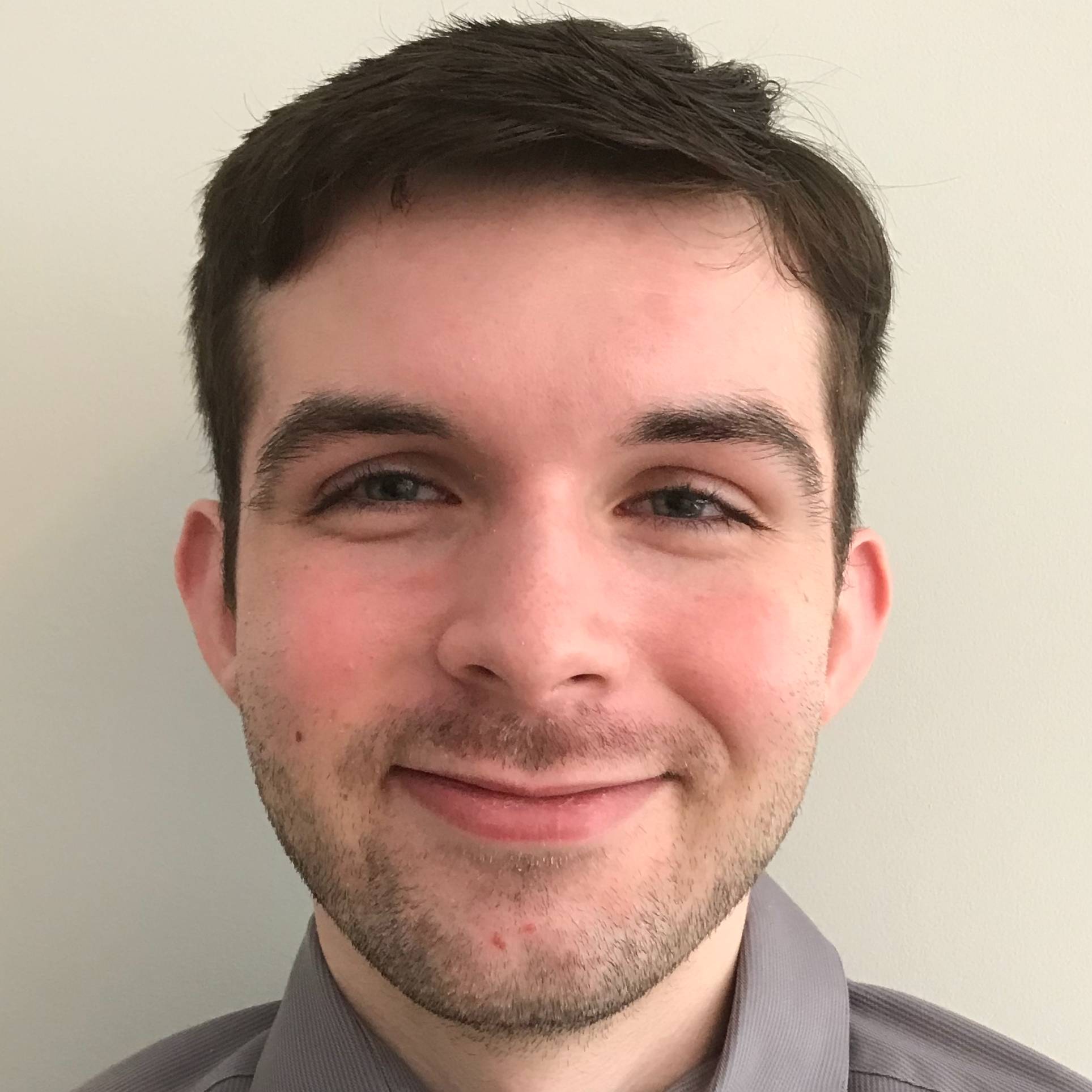 Josh Harry is a fourth-year Ph.D. student in the Department of Physics and Astronomy under advisor Mel Ulmer. After previously prioritizing paid graduate assistantships to make ends meet, Harry said the grant funding allows him to finally make research his primary focus.
“It feels meaningful as a personal achievement to get a break from that ‘grant drought’ and for my research, and time invested, to be compelling enough to earn a NASA award,” said Harry.
Harry’s team studies a particular galaxy pair in which only one galaxy has a supermassive black hole (SMBH) that is gradually growing by consuming the surrounding matter, creating a luminous active galactic nucleus (AGN), while the SMBH of its companion galaxy remains inactive. By analyzing the AGN’s X‑ray and visible light radiation, he aims to better understand how such “offset” AGN systems are produced, as well as the physics of how AGNs grow.
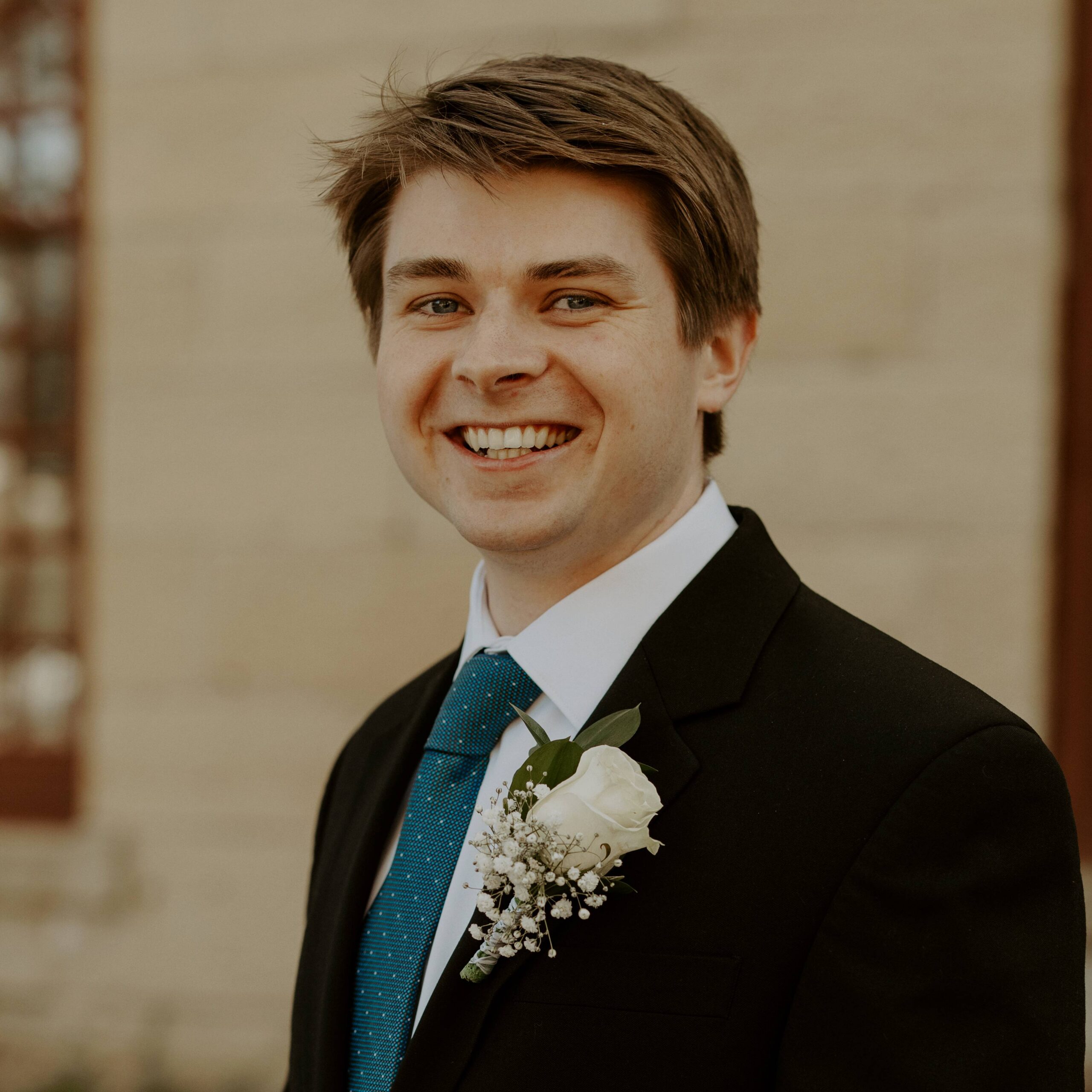 Andy Marszewski is a fifth-year graduate student in the Department of Physics and Astronomy under advisor Claude-André Faucher-Giguère. He’s also a lifelong Illinoisian, which he said makes winning the fellowship that much more rewarding.
“It is awesome that our state is placing an emphasis on advancing research in astrophysics,” said Marszewski. “I’m really grateful to get to be a part of that and thank the Illinois Space Grant Consortium for this incredible opportunity and support.”
Using computer simulations of galaxy formation, Marszewski studies newly identified mysteries of the early universe. These mysteries include how patterns in the chemical makeup of faraway galaxies formed and what exactly the bright, compact “Little Red Dots”, which were discovered in 2022 by the James Webb Space Telescope, are. Marszewski said the award will significantly accelerate his research efforts and brighten his prospects for future job and fellowship applications.
Northwestern University is one of ten ISGC affiliate institutions eligible for its students to receive the merit-based fellowship, and among just seven schools whose students received awards in this application cycle, according to ISGC Senior Coordinator Heidi Bjerke.
As part of the National Space Grant College and Fellowship Project, which NASA started in 1989, Northwestern is among colleges and universities across the country that expand opportunities for individuals to participate in NASA’s aeronautics and space projects through STEM education, research, and public outreach.
Cai’s advisor stressed the importance of an award that signals to students that their research is fundamental, particularly at the early-career stage, when students are just getting their research off the ground and working toward publication.
“NASA consistently breaks barriers and is the premier space agency,” Fong said. “To have a fellowship associated with NASA and have research aligned with its mission statement is a particularly special honor, especially for early-career scientists who are developing their own scientific identities.”
by Georgia Kerrigan