
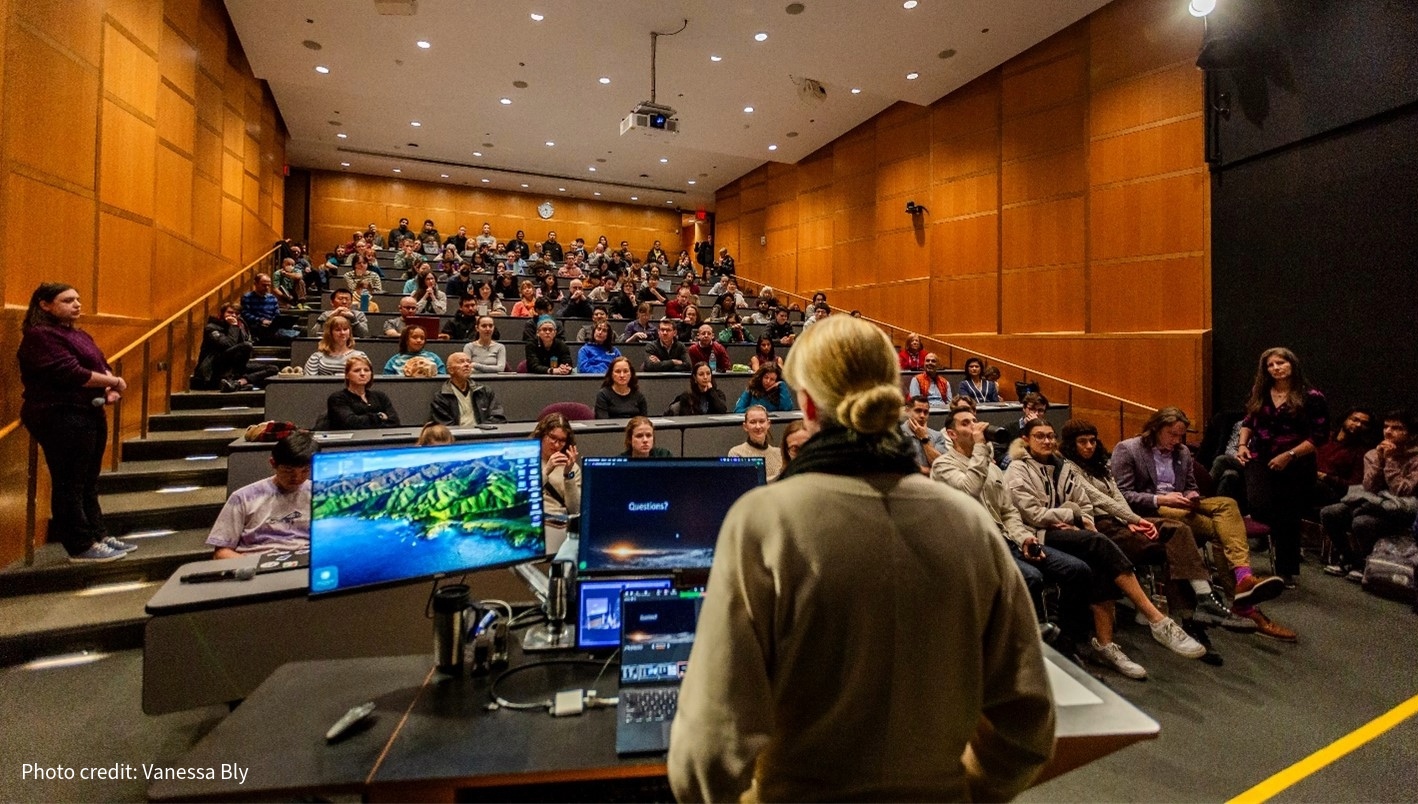
On February 3, 2026, Microbiologist and retired NASA astronaut Kate Rubins visited Northwestern University to give a special seminar on conducting biology in space, from experimental design in microgravity to discovery aboard the International Space Station (ISS). Hosted by Northwestern’s Center for Synthetic Biology (CSB) and the Center for Interdisciplinary Exploration and Research in Astrophysics (CIERA), the event served as a lead-up to CSB’s 10-year anniversary celebration this May.
Dr. Kate Rubins
Rubins’ visit began with individual meetings with faculty from CSB and CIERA, followed by lunch with graduate students where she discussed her scientific work and career path.
Selected as a NASA astronaut in 2009, Rubins flew on Expeditions 48/49, becoming the first person to sequence DNA in space. She later returned as a flight engineer on Expedition 63/64, concluding her second mission in 2021. Across two spaceflights, Rubins spent 300 days in space and completed four spacewalks, making major contributions to scientific research and space operations.
The idea to sequence DNA in space emerged from a desire to do microbial and environmental sensing to better understand how cells and microbes behave on board the space station. The ultimate goal was to develop a way to maintain human health in space for longer durations, such as a trip to Mars. The experiment was run by NASA as an official payload called Biomolecular Sequencer, led by NASA microbiologist Sarah Castro-Wallace at the Johnson Space Center.
The challenge, Rubins explained, was figuring out how to run such experiments in real time, given that similar laboratory setups often take up to five years to engineer and prepare.
“Prior to this experiment, if we wanted to identify pathogenic bacteria growing on a human, we had to wait until the vehicle undocked,” Rubins said. “We would swab the sample, streak it onto a plate, wrap it in parafilm, send it back to Earth, let it crash into Kazakhstan, have NASA fly a G5 to retrieve it, and then finally start clinical microbiology testing. That process could be three or four months. Anybody who’s worked with the bacteria knows they don’t respect a three-month space mission.”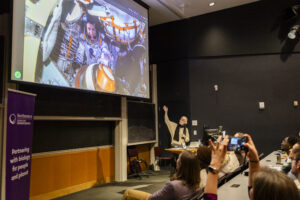
Undaunted, Rubins, then a junior astronaut, came up with an unconventional solution to test pipetting in space.
“I worked closely with our psychological support team which allows us five kilograms of cargo to the space station,” she said. “People send cookies, stuffed animals and cards from their family. I told my family, ‘I know you guys love me, but I’m sending scientific equipment and my pipettes instead.’ It took a while to get through the NASA processes because it wasn’t something that they’d seen before,” she added with a laugh.
Using the benchtop tools Rubins brought with her, along with other cleverly engineered devices, she successfully sequenced DNA on the first run. Beyond achieving the first DNA and RNA sequencing in space, she also established methods to prepare sample libraries onboard and conduct environmental profiling of station surfaces and water systems.
Soon after, Rubins was tasked with collecting a thousand samples onboard the ISS. This effort was part of a large scale microbial sequencing project led by Rodolfo Salido in the lab of Rob Knight at the University of California, San Diego.
“This took a week,” she said. “I put my Apple air pods in, started with ’60s rock anthems on day one, and by the end I was listening to early 2000s rock anthems. But the result was a really cool data set—large scale completely culture-independent. We also did metabolomics, allowing us to integrate microbial and chemical signatures and laying a foundation for mapping the microbiomes of future spacecraft.”
Looking ahead, Rubins envisions scaling these experiments to achieve much higher throughput and integrating the necessary hardware directly into space station systems.
“One of my favorite ideas—what I call, ‘Kate’s favorite experiment,’— is that when we land on the Moon, I want to start swabbing the astronauts inside the lander and then as they head out for geologic collections,” she said. “I want to map the footprints of humans and all their nasty bugs as we move across a sterile planet.”
Rubins believes that applying synthetic biology to the constraints of limited-resource environments like space could unlock solutions to major challenges on Earth, including power generation, clean water access, equipment design, cold storage, data communications, waste reduction, and human health.
“We’re thinking about how to unite space science, engineering, biology and medicine to actually solve problems on Earth,” Rubins said. “There are billions of people on the planet who can benefit from discoveries that originate in space.”
Rubins holds a BS in Molecular Biology from the University of California and a PhD in Cancer Biology from Stanford University School of Medicine. Before joining NASA, she conducted HIV-1 research at the Salk Institute for Biological Sciences and served as a Fellow and Principal Investigator at the Whitehead Institute, leading research on viral diseases in Central and West Africa.
Now a faculty member at the University of Pittsburgh, Rubins is the Director of the new Trivedi Institute for Space and Global Biomedicine focused on translating space-driven discoveries into real-world impact.
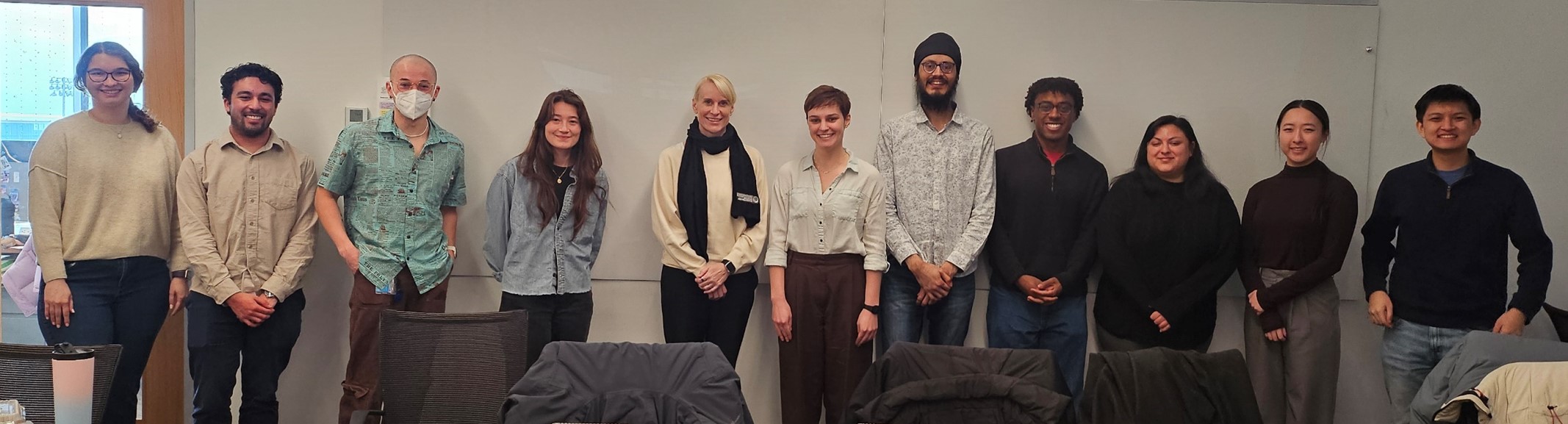
Kate Rubins (left of center) at lunch with CSB and CIERA students.
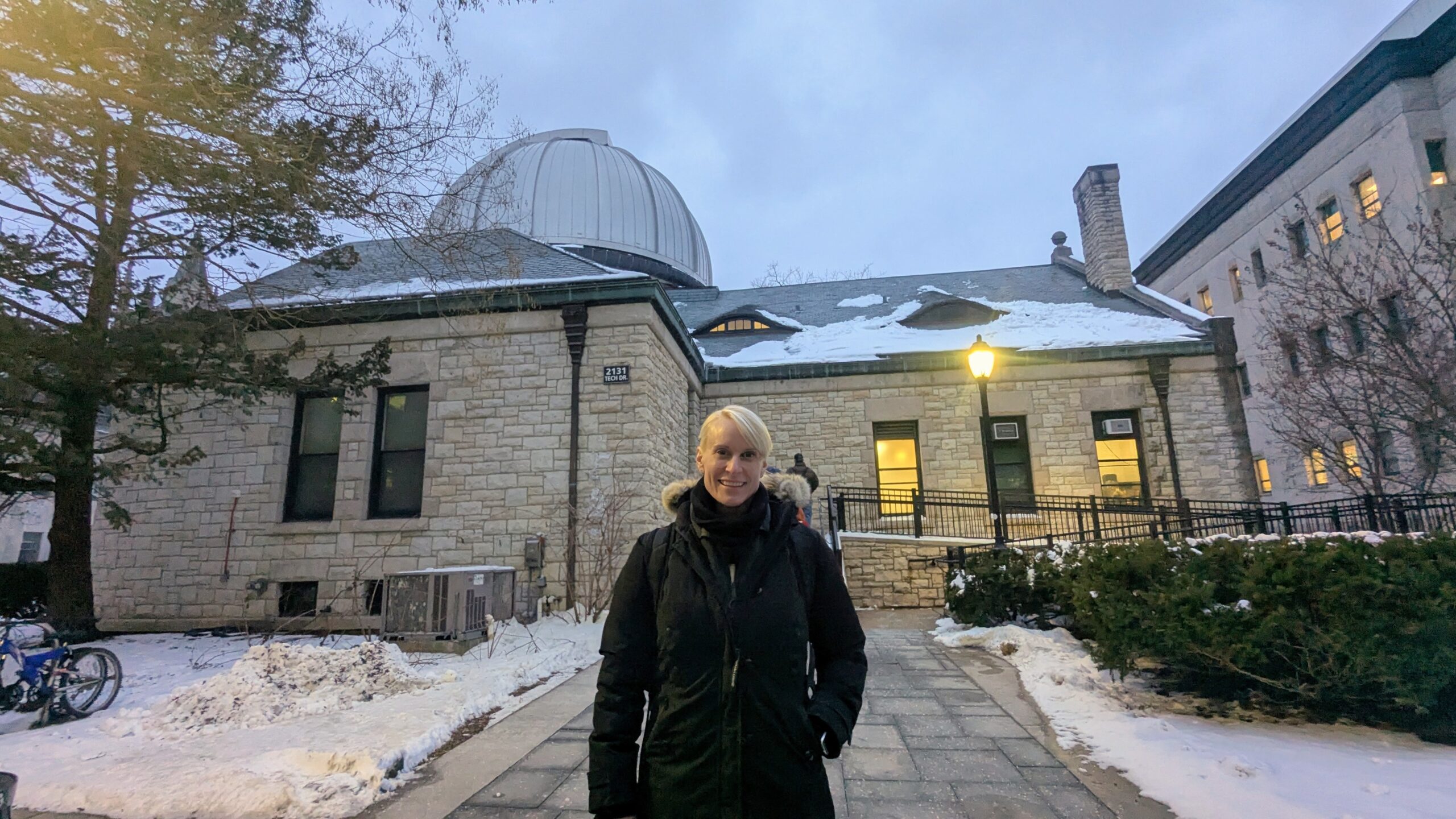
Kate Rubins in front of Northwestern’s Dearborn Observatory
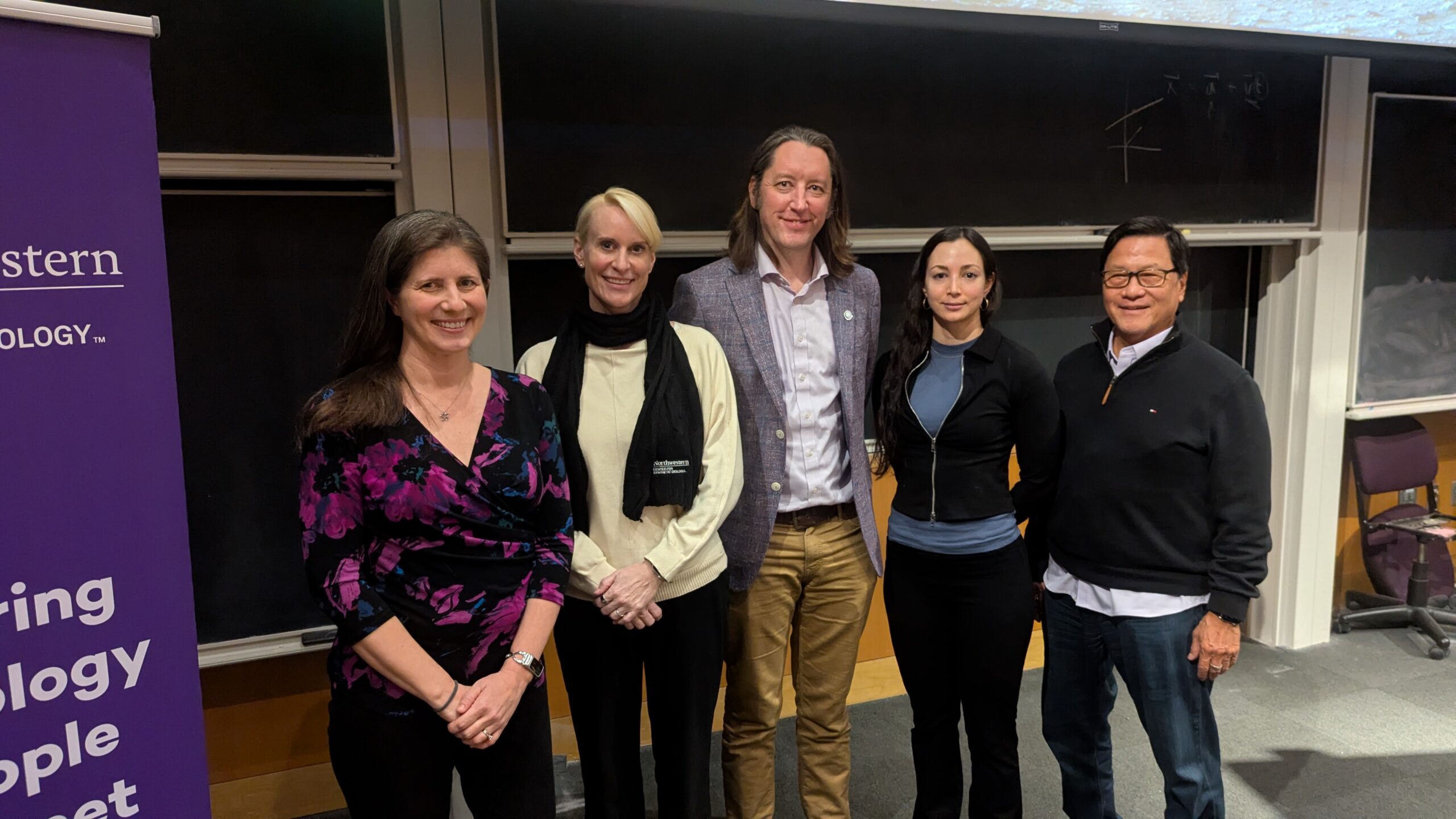
(Left to right): CSB Co-Director Danielle Tullman-Ercek, Kate Rubins, CSB Co-Director Julius Lucks, CIERA Assistant Director Tarraneh Eftekhari, and CIERA Board of Vistor member Burt Fujishima
by Lisa La Vallee
Main photo credit: Vanessa Bly
Inside photo credits: Image 1, 4 & 5: Lisa La Vallee; Image 2: Danielle Tullman-Ercek; Image 3: Divjyot Singh.