
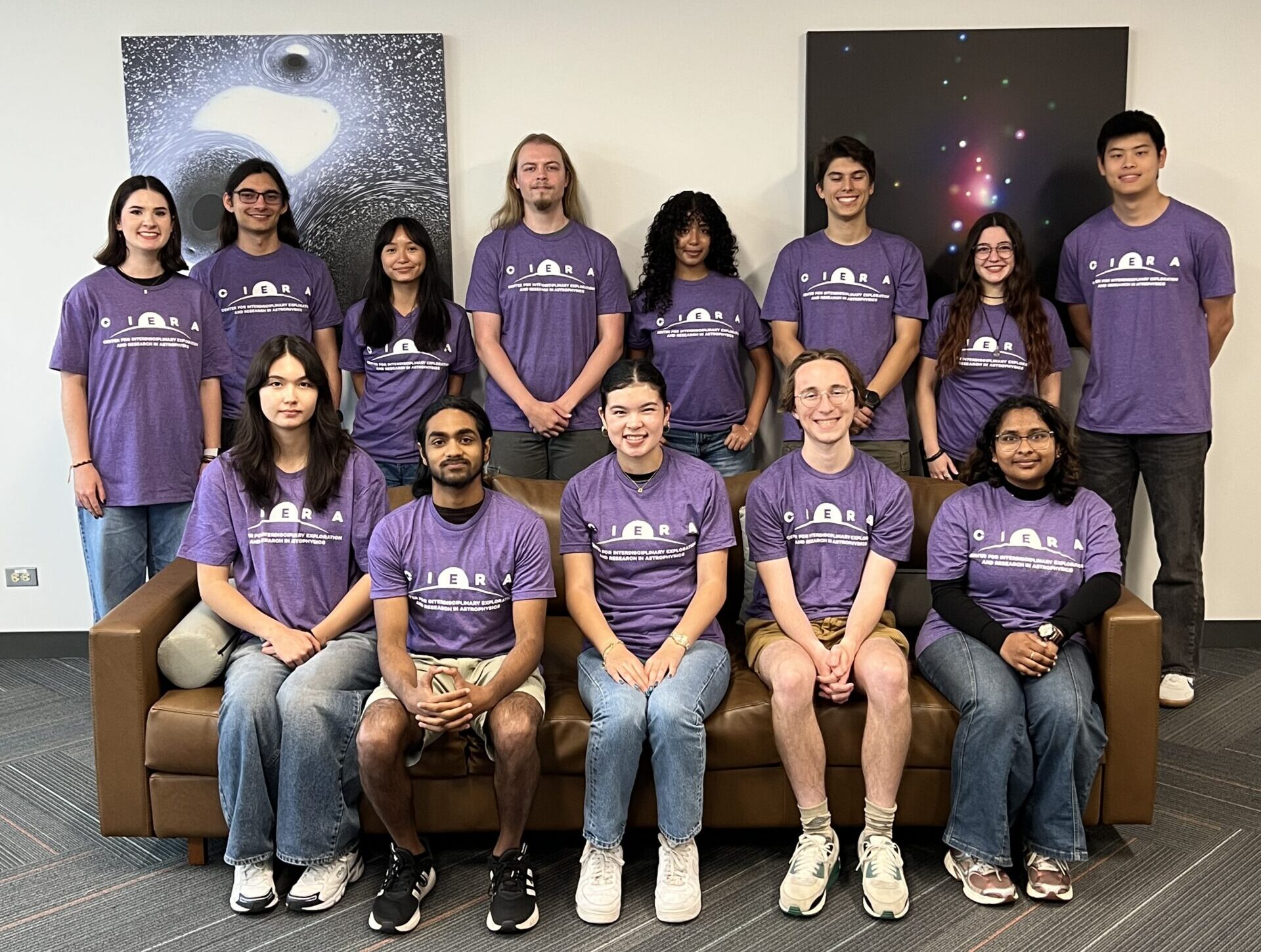
The 2026 CIERA REU cohort. Back row, from left: Meredith LeFevre, Luke Moffett, Aly Tran, Ben Spangler, Mariam Helal, Vincent Hernandez, Rebecca Wisenbaker, Matt Tie. Front row, from left: Braedyn Kim, Abhi Ghosh, Kya Aranha, Max Morris, Laya Binu.
On Aug. 20, 13 undergraduate students from across the country presented posters at Northwestern University’s Center for Interdisciplinary Exploration and Research in Astrophysics (CIERA), marking the culmination of nine weeks of rigorous astrophysics research through CIERA’s Research Experience for Undergraduates (REU).
Now in its twelfth year at CIERA, the REU program is a carefully built training program for students to participate in the graduate and doctoral research experience and build their confidence as they pursue careers in academia. It is funded by the National Science Foundation and led by CIERA Research Assistant Professors and REU Program Directors Cliff Johnson and Mark Gorski.
According to Johnson, one of the main goals of the REU is exposure. While most students enter the program having done research, their experiences may be limited by the size of the astrophysics program at their home institution or a lack of choice in what they research.
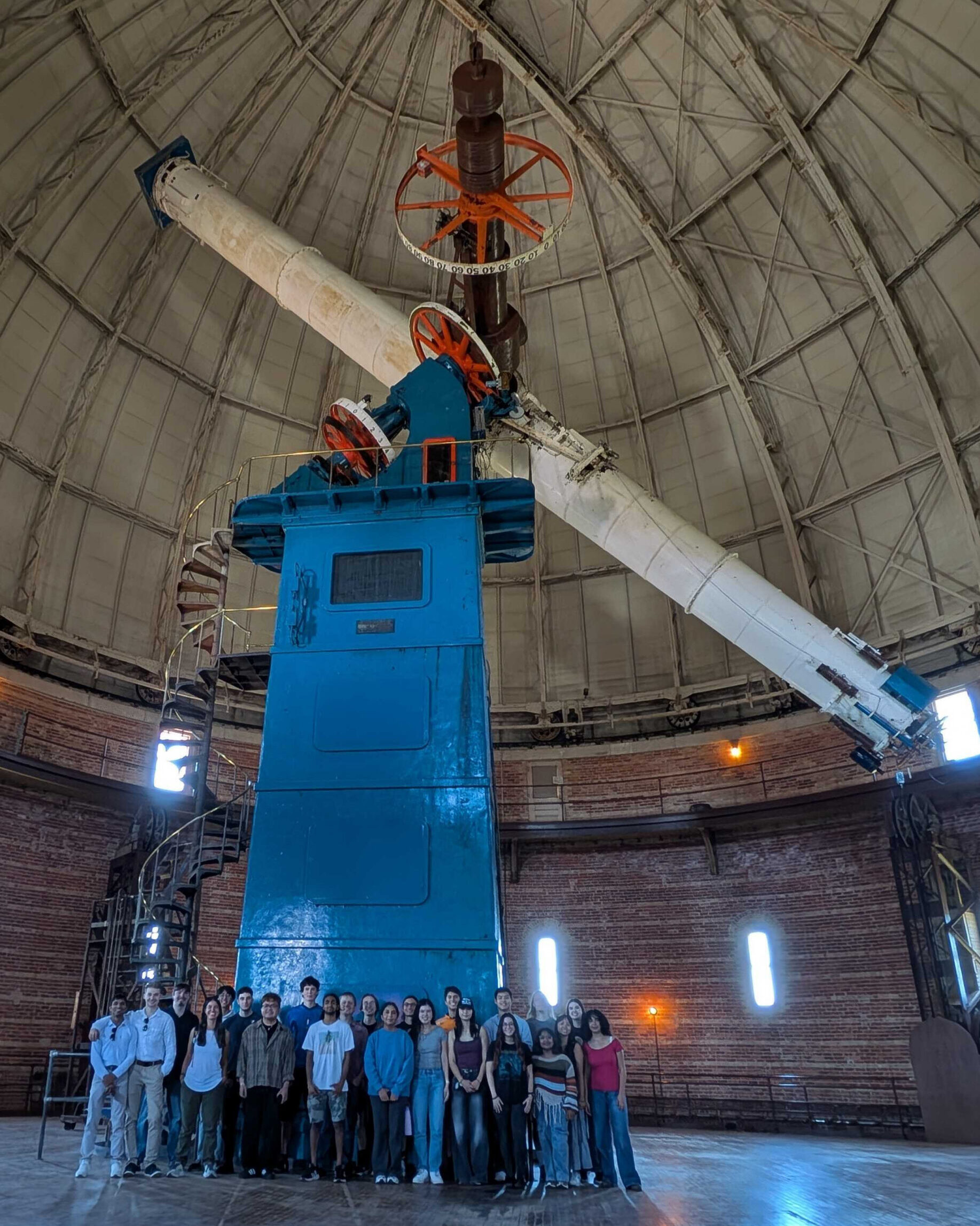
The 2026 REU cohort with students from the SkAI-Institute SEED program, visiting Yerkes Observatory.
“For many students, just being able to see the breadth of research we have at CIERA, to choose from a catalog of different projects, and to see the other research students around them are doing is a really unique and valuable learning experience,” said Johnson.
Each REU student joined the research group of a CIERA faculty member, receiving close mentorship through one-on-one meetings, while many also collaborated with graduate and postdoctoral CIERA researchers.
Students started the program with extensive Python coding lessons and learned how to operate a supercomputer, crucial skills for projects that all relied on computational science in some form, whether to run a simulation of star cluster evolution or process terabytes of telescope data.
Access to Northwestern’s Quest High-Performance Computing Cluster, or supercomputer, is one example of a resource that most students in this year’s cohort had never engaged with in their previous research.
Vincent Hernandez, a junior at Williams College — a small institution where there are typically fewer than ten students majoring in astrophysics per year — especially enjoyed working with the supercomputer, which he says “wasn’t on [his] radar at all” before coming to CIERA.
“I’ve gotten so much more out of the program than I thought I would,” Hernandez said. “My past research was just research. This summer, it’s not just about ‘Can you do the research?’, it’s about learning these fundamental skills that lead up to and strengthen the process.”
Hernandez researched exoplanets using images previously taken from Hawaii’s W. M. Keck Observatory, a pair of the world’s most advanced telescopes. At CIERA, he attended a remote Keck telescope viewing session, where his research team observed the night sky over the Pacific from a conference room in Evanston.
Students also participated in Northwestern’s Research Communication Training Program, led by instructors from The Graduate School, where they learned how to present their research to a variety of audiences and strengthen their scholarly writing. Additionally, they attended panels where guest speakers offered advice on navigating the competitive path of academia beyond the undergraduate curriculum and described how astrophysics research experience can also be applied in an array of non-academic careers.
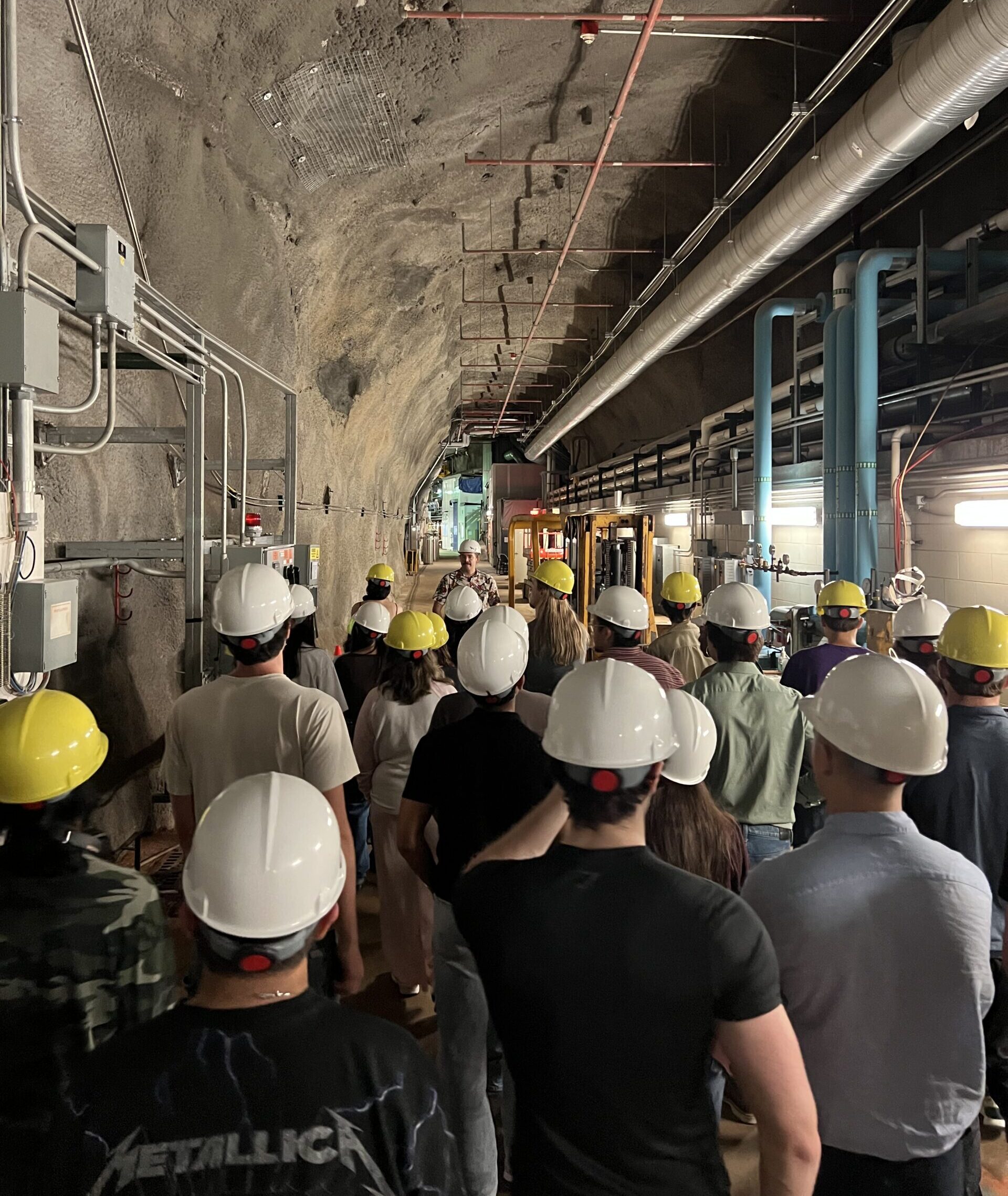
The 2026 REU cohort visiting Fermilab.
But the REU program isn’t all training, all the time. Students visited the Yerkes Observatory, the Adler Planetarium, and went behind the scenes at Fermilab, the nation’s premier particle physics lab and a cohort-favorite excursion. The group also had weekly meetings where they shared their research successes and struggles with each other, while many grew close outside of program scheduling, exploring Evanston and Chicagoland together.
Beyond their presentations to astronomy colleagues at CIERA, the students also had the opportunity to present their research to a public audience at Adler Planetarium.
For Laya Binu, a junior at the University of California, San Diego, presenting at Adler was the perfect crossover of her passions: research and outreach.
“People assume physics is just terrifying equations on blackboards. But when we see the blackboards, we get scared and excited too. I want to show them that we don’t know what’s going on, but figuring that out is the fun part,” said Binu. “I love the opportunity to share my work with kids, to hopefully be an inspiration and give them the sense that physics isn’t scary.”
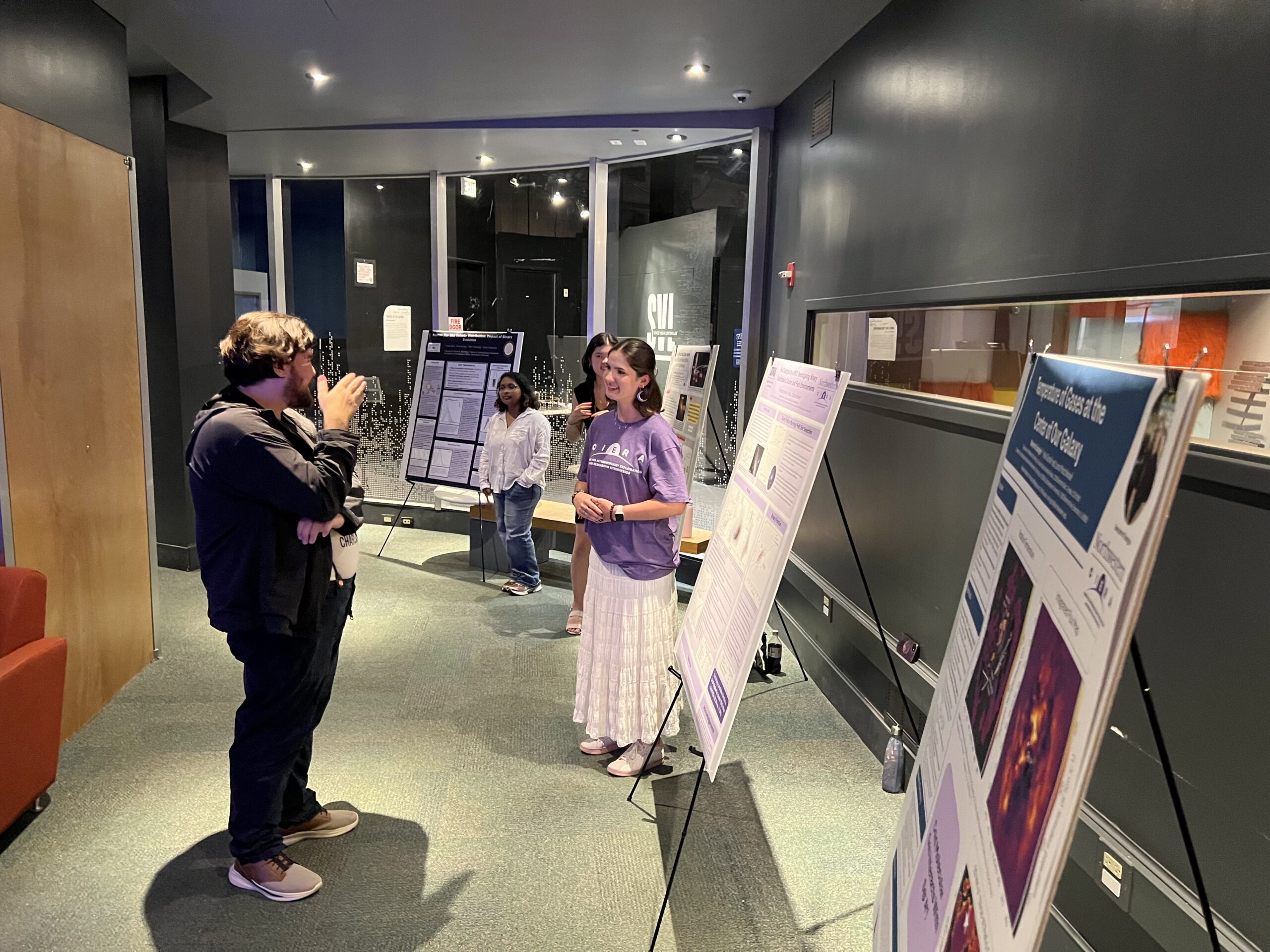
From left: Laya Binu, Kaya Aranha, and Meredith LeFevre presenting their research at Adler Planetarium.
A sentiment, Johnson says, that the REU program aims to instill in its participants, too.
“I want them to see that they can do this,” Johnson said. “They can be a researcher. It’s not some person in a white coat in an ivory tower. It’s them.”
And though many students said they started the summer with imposter syndrome, fearing they lacked adequate research skills or intimidated by the level of experience of other students, Johnson said the program’s various workshops help students feel equally equipped to be researchers.
“Of course it’s frustrating at times, but it’s also really rewarding,” said Rebecca Wisenbacker, a senior at The University of Texas at Austin. In her research, Wisenbaker examined the dust composition around red supergiants, the most voluminous stars in the universe, under advisor and CIERA Research Assistant Professor, Charlie Kilpatrick.
“My advisor said, ‘We’re doing something that has never been done before. It’s not supposed to be straightforward,’ which is so helpful to hear,” said Wisenbaker, who added that her favorite part of her work is the pursuit of knowledge and the opportunity to make a contribution to the astrophysics field.
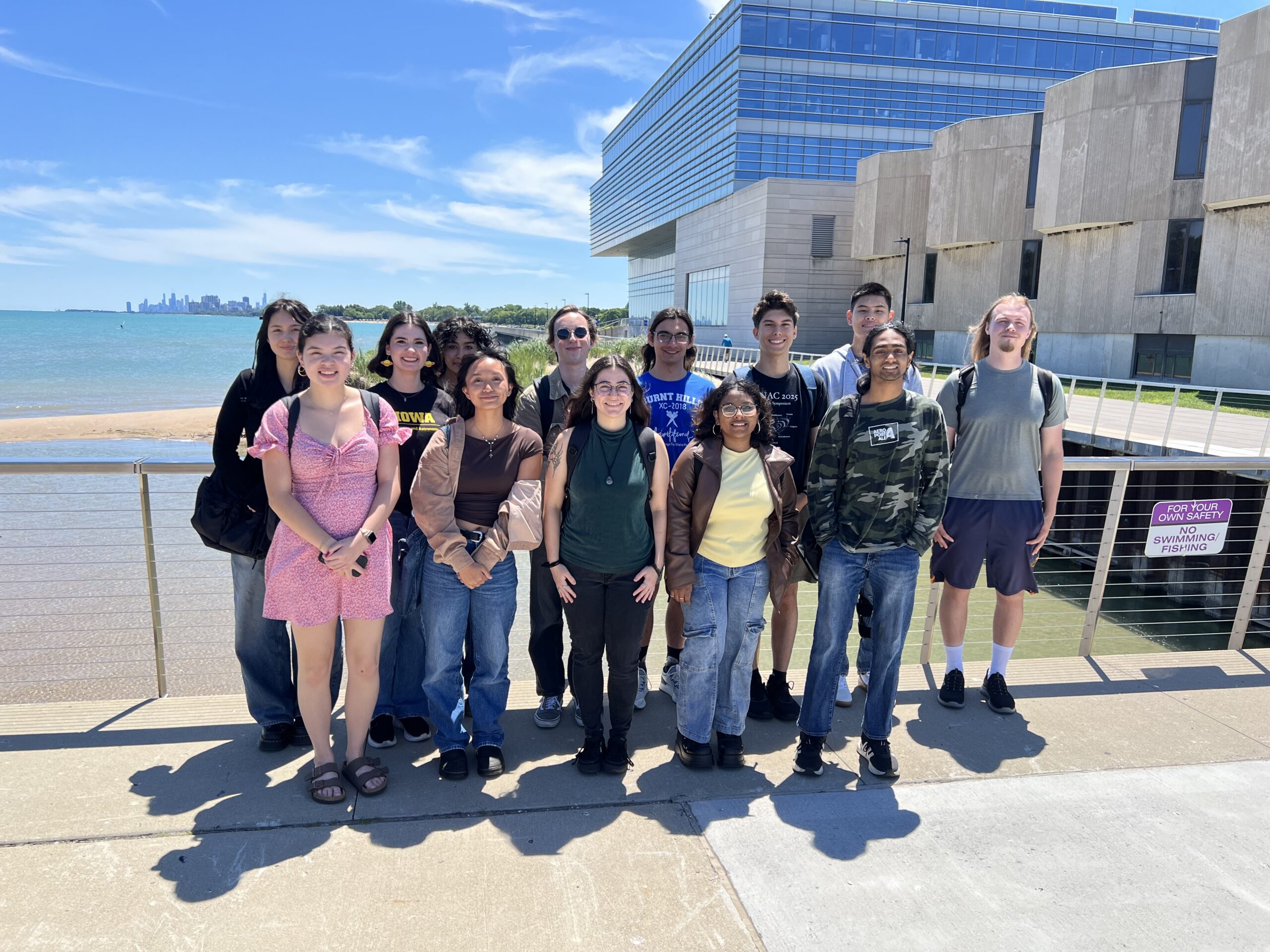
The 2026 REU cohort at Northwestern University.
Indeed, Johnson said that one of the biggest lessons for newer researchers is that there is not a clear path to analysis and discovery.
“Real research is not like their lab course, where, if they just follow the procedure, they get the right answer at the end,” Johnson said. “In many cases, projects do really result in exciting discoveries and useful results. But success in this REU is measured by the skills students develop.”
In January, most of the cohort will present their research at the semi-annual American Astronomical Society meeting, the largest gathering of astronomers from all over the country. And though students have officially completed their REU program, many will continue their research projects with their mentors past the summer, with CIERA faculty serving as long-term mentors for this cohort of rising astrophysicists.
by Georgia Kerrigan
2026 CIERA REU Cohort:
Kya Aranha
Rensselaer Polytechnic Institute (Junior; Physics)
Advisors: Adam Miller and Jason Hinkle
Project: Not Every Black Hole Stays Home: Using Tidal Disruption Events (TDEs) to Search for the Wanderers
Laya Binu
University of California, San Diego (Junior; Astronomy and Astrophysics)
Advisors: Vicky Kalogera, Anarya Ray, and Seth Gossage
Project: Neutron Star Kick Velocity Distribution: Impact of Binary Evolution
Abhi Ghosh
Boston University (Senior; Astronomy and Physics)
Advisor: Tjitske Starkenburg
Project: Using Binary Stars in Stellar Streams to Determine Properties of Globular Clusters
Mariam Helal
University of California, Berkeley (Junior; Planetary Science and Astrophysics)
Advisor: Elvira Mulyukova
Project: Salt Diapirism in Europa’s Periodically Thickening Icy Shell
Vincent Hernandez
Williams College (Junior; Astrophysics and Computer Science)
Advisor: Jason Wang
Project: Characterization of Brown Dwarf HD 176535B with KPIC
Braedyn Kim
University of Illinois Urbana-Champaign (Senior; Engineering Physics)
Advisors: Claude-André Faucher-Giguère and Kung-yi Su
Project: Testing Inner CGM Virialization: Connecting CGM Emission to Central Galaxy Properties with FIRE-2
Meredith LeFevre
The University of Iowa (Senior; Physics and Astronomy)
Advisor: Cliff Johnson
Project: Red Supergiants in M31: Investigating Binary Candidates in Cluster and Field Environments
Luke Moffett
Dartmouth College (Senior; Physics)
Advisor: Tarraneh Eftekhari
Project: Characterizing Mass-Loss Rates of Type II Supernova Progenitors with Late-Time Radio Observations
Max Morris
Carleton College (Senior; Physics)
Advisor: Giles Novak
Project: Mapping Dust Emission from the Star Forming Region ρ Oph A Using the Large Millimeter Telescope
Ben Spangler
Colorado State University Pueblo (Senior; Math and Physics)
Advisor: Mark Gorski
Project: Temperature of Molecular Gas at the Center of Our Galaxy
Matt Tie
Haverford College (Junior; Physics and Astronomy)
Advisor: Sasha Tchekhovskoy
Project: Understanding Jet Disruption of a Rapidly Spinning BH by Misaligned Angular Momentum
Aly Tran
The University of Texas at Austin (Junior; Astronomy and Physics)
Advisor: Allison Strom
Project: Characterizing Superluminous Supernovae Host Galaxies with Cue
Rebecca Wisenbaker
The University of Texas at Austin (Senior; Astronomy and Physics)
Advisor: Charlie Kilpatrick
Project: Constraining Circumstellar Dust Around Extragalactic Red Supergiants with JWST