
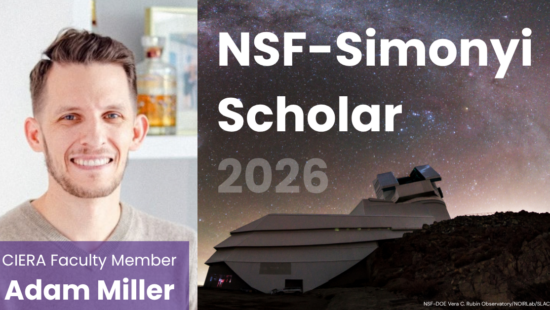
CIERA’s Adam Miller named NSF-Simonyi Scholar
Northwestern University’s Center for Interdisciplinary Exploration and Research in Astrophysics member Adam Miller, assistant professor in the Department of Physics and Astronomy, has been...
Northwestern University’s Center for Interdisciplinary Exploration and Research in Astrophysics member Adam Miller, assistant professor in the Department of Physics and Astronomy, has been...

CIERA’s Aaron Geller has published a new astrophysics textbook, written together with collaborators Nathan Leigh and Taeho Ryu. The book, titled Dawn of the...
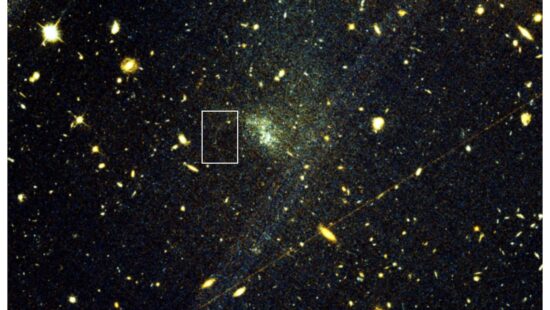
Update (Aug 14, 2026): This research was recently featured by CNN. For billions of years, an ancient star cluster has been slowly unraveling, leaving...
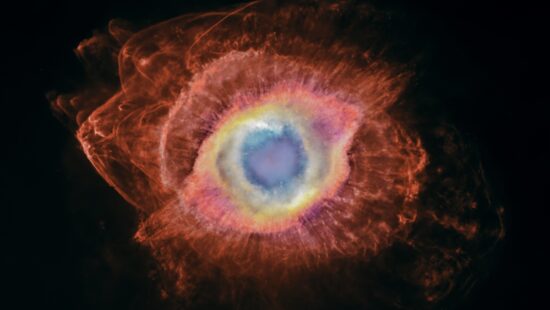
An international team of scientists, including Northwestern University astrophysicists, has captured an unprecedented view of a dying star’s remains in the act of being...
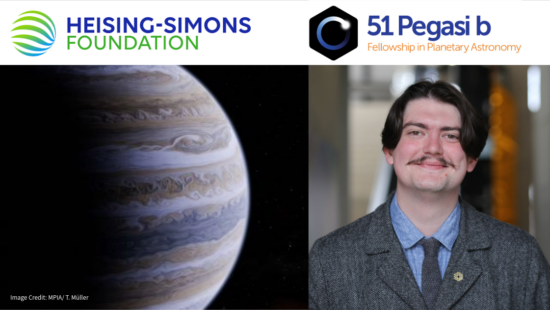
The Center for Interdisciplinary Exploration and Research in Astrophysics (CIERA) is proud to announce that William Balmer (they/them) has been named Northwestern University’s first...
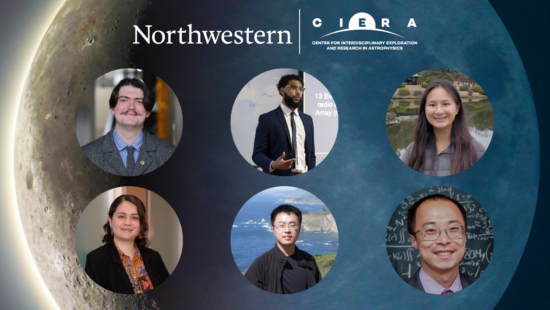
We are delighted to announce that six CIERA Postdoctoral Fellows will be joining the CIERA community in Fall 2026. Please join us in...
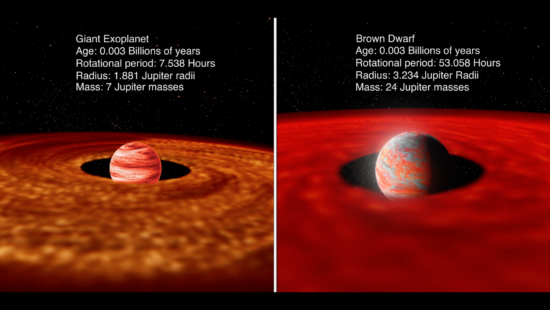
Clearest evidence yet that giant planets spin faster than their cosmic lookalikes For decades, astronomers have struggled to differentiate giant planets from brown dwarfs,...
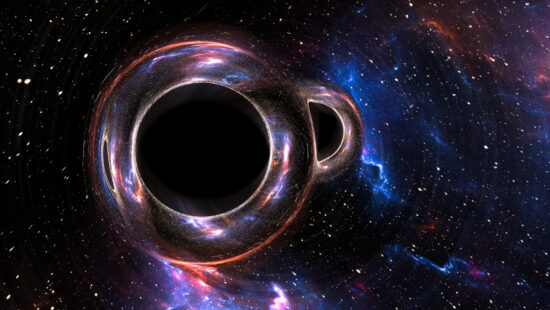
EVANSTON, Ill. — An international team of scientists, including Northwestern University astrophysicists, has detected 128 new gravitational-wave candidates — more than doubling the size...
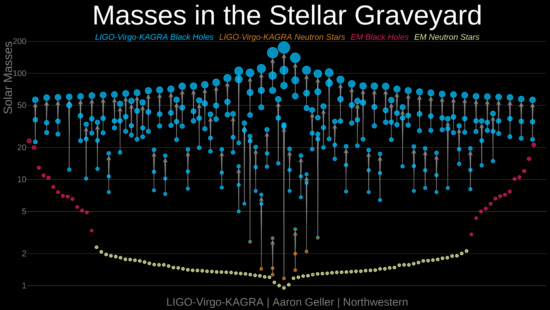
Largest catalog ever assembled, detailing 35 events, released today An international team of researchers, including Northwestern University astrophysicists, has released the largest-ever catalog of...
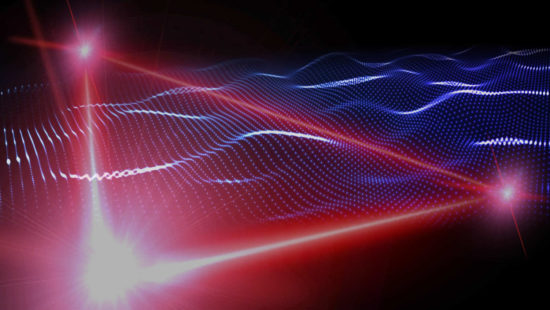
Image Credit: NASA CIERA Research Assistant Professor Giacomo Fragione was selected as one of 6 recipients for a highly-competitive NASA grant to design and...
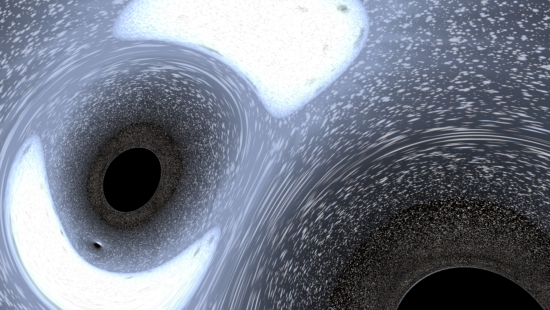
The Research Experiences in Astronomy at CIERA for High School students provided an interactive, hands-on astronomy research experience for high school students remotely this...
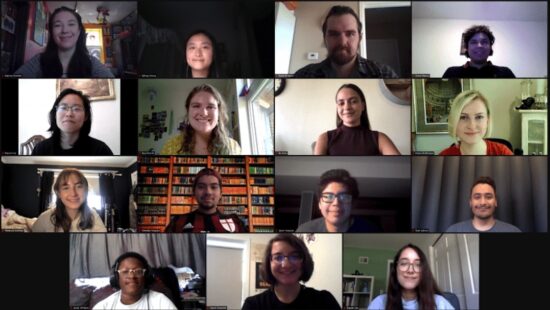
This summer, CIERA hosted 15 undergraduate students as a part of the Research Experiences for Undergraduates (REU) program. Heading into a second year of...